
How Much CO2 a Tree Absorbs and Its Role in the Voluntary Carbon Market
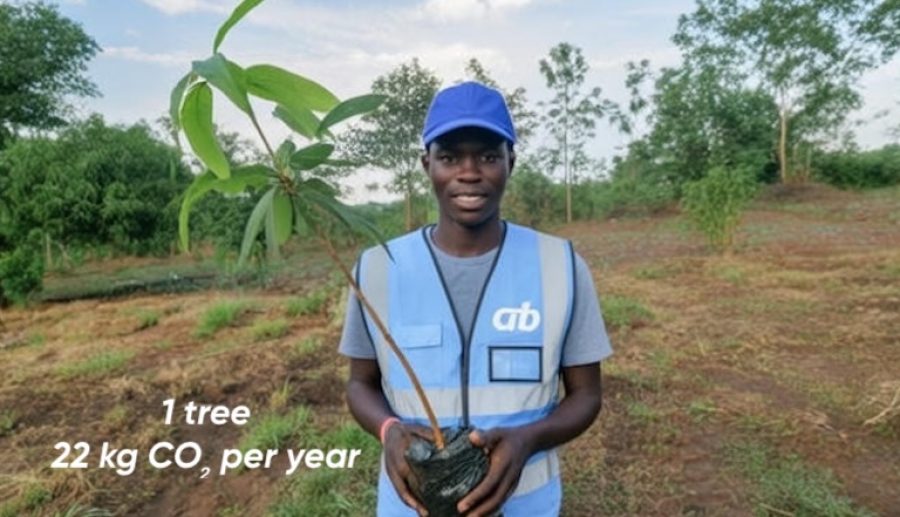
Crbcoin’s work in the voluntary carbon market starts with biology. Everything begins with a simple question. How much C02 does a tree actually absorb. The answer isn’t uniform. Species behave differently. Young trees grow faster than older ones. Tropical climates drive higher uptake than temperate zones. Soil health and water availability shift the numbers even further. Still, most climate models used in voluntary market methodologies land in the same practical range. A single tree absorbs roughly ten to forty kilograms of C02 per year depending on species and conditions.
But the voluntary market doesn’t issue credits on a per tree basis. It issues credits per tonne. Converting tree growth into verified climate value requires structured MRV. Satellite imagery tracks canopy change and disturbance patterns. Allometric equations translate tree dimensions into above and below ground biomass. Field plots calibrate the models and establish statistical confidence. Together these datasets define exactly how many tonnes of C02 a project removes over time.
Only after independent audit can a project generate carbon credits. Each credit represents one tonne of C02 that is scientifically accounted for. Credibility is essential. The voluntary market relies on transparency and high integrity methodologies so that credits reflect real measurable climate impact rather than assumptions. Verification cycles are strict because the market demands confidence in every tonne issued.
The impact extends beyond atmospheric math. Reforestation projects rebuild ecosystems, stabilise soil, restore water cycles and strengthen biodiversity. For communities they create income through planting, maintenance and long term land stewardship. This makes investing in green projects both a climate strategy and an economic catalyst. Forests store C02 but they also build local resilience.
Demand for high quality voluntary market credits continues to rise. Organisations want assets with real environmental integrity. Meanwhile MRV technologies keep advancing. High resolution satellites LiDAR and machine learning biomass models reduce uncertainty and strengthen credit quality. These improvements support the shift toward long term reliable carbon project development.
At its core the story remains simple. Trees absorb C02 as they grow. When that growth is measured verified and scaled the voluntary carbon market transforms it into climate impact that is investable and credible. The pathway from a single tree to a carbon credit is not symbolic. It is scientific accountable and central to the future of climate finance.